
Herbs vs. Viagra
how do herbal remedies really compare to pharmaceutical enhancement?
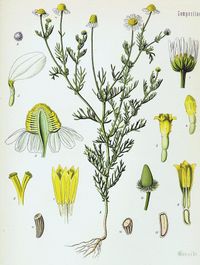
Part 1: How we got here
As an herbalist, I'm often asked the most rudimentary, blatantly skeptical questions about medicine traditions that have been in practice, effectively, for millennia (the hubris is fascinating).
But I can't blame these people. Instead I have to recognize that there's a tenuous and complicated history between western and traditional medicine in this country, and most of us don't realize that this history is deeply ingrained in the American experience, having gained true momentum in the 1910s.
THE 1910s: A NEW KIND OF MEDICAL SCHOOL
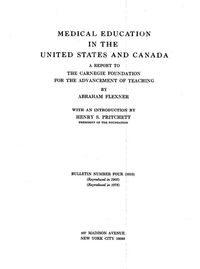
Title page of the Flexner Report, Medical Education in the United States and Canada (1910). Public domain, via Wikimedia Commons.
In 1910, the Flexner Report, a sweeping review of American and Canadian medical schools funded by the Carnegie Foundation, set a new standard for medical education built around laboratory science and hospital training. Between 1910 and 1935, more than half of American medical schools closed or merged, including nearly all of those that taught botanical and "eclectic" medicine.
It was then that the efficacy of time-honored herbal remedies was intentionally and overwhelmingly lambasted by a fresh legion of western physicians who were instructed instead to extol the virtues of the ultramodern, trending pharmaceutical medicine alongside the budding pharmaceutical industry.
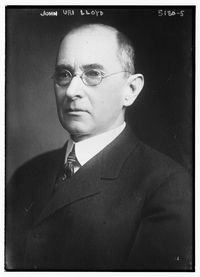
John Uri Lloyd, pharmacist and longtime professor at Cincinnati's Eclectic Medical Institute, one of the last American schools to teach botanical medicine. Bain News Service, c. 1915. Library of Congress, public domain.
The campaign was wildly effective. Physicians, medical schools and the general public shifted perception about herbal medicine at an unprecedented rate, coming to regard it as a backwards, ineffective, even dangerous practice within the span of a generation. And this was just the beginning of the stronghold the pharmaceutical industry would come to have over the way medicine was practiced in America.
THE 1960s: SEEDS FOR CHANGE
It wasn't until the 1960s that a small group of progressive, nature-loving "hippies" got enough of a cultural stronghold to start advocating for a return to traditional medicine in a way that would tentatively infiltrate public perception and sow seeds for change. That change has been incredibly slow though, and not terribly impactful.
MUCH OF THE WORLD NEVER LOST THE THREAD
American medical schools today remain some of the least informed about traditional, botanical, and alternative medicines, while in contrast, much of the world has maintained a relationship to more integrative practices.
In Germany for instance, all medical students are required to study naturopathic medicine, plant medicine included, and plant medicines are a familiar part of many physicians' practice. And in Japan, well-regarded as one of the healthiest countries on earth, nearly 9 in 10 physicians prescribe traditional Kampo herbal formulas.
That's a century of cultural conditioning behind every skeptical question I hear.
In Part 2: what this gap means in the exam room today, why it's so hard to be an herbalist in America, and my favorite answer to "do you really think that stuff works?"
MADE THE OLD WAY
Every formula we make, from our best-selling Classic Aphrodisiac Formula No. 12 to Hormone Balance, is made by hand in small batches with certified organic herbs, in simple, timeless ways that honor medicine making traditions our ancestors understood.
Xo,
Jessica
Please talk with your healthcare provider before starting any herbal product, especially if you are pregnant, nursing, taking medication, or managing a health condition.
These statements have not been evaluated by the Food and Drug Administration. This product is not intended to diagnose, treat, cure, or prevent any disease.
Sources: A. Flexner, Medical Education in the United States and Canada (Carnegie Foundation, 1910); German medical licensing regulations (Approbationsordnung für Ärzte, Querschnittsbereich 12); Kampo physician survey, Traditional & Kampo Medicine (2024), doi:10.1002/tkm2.1418.


